The Ultimate Guide to Medical Science Abbreviations: A Comprehensive Study Material for Students and Professionals
48 Visited Vidyarthi Vigyan Manthan (VVM) • Updated: Saturday, 18 July 2026
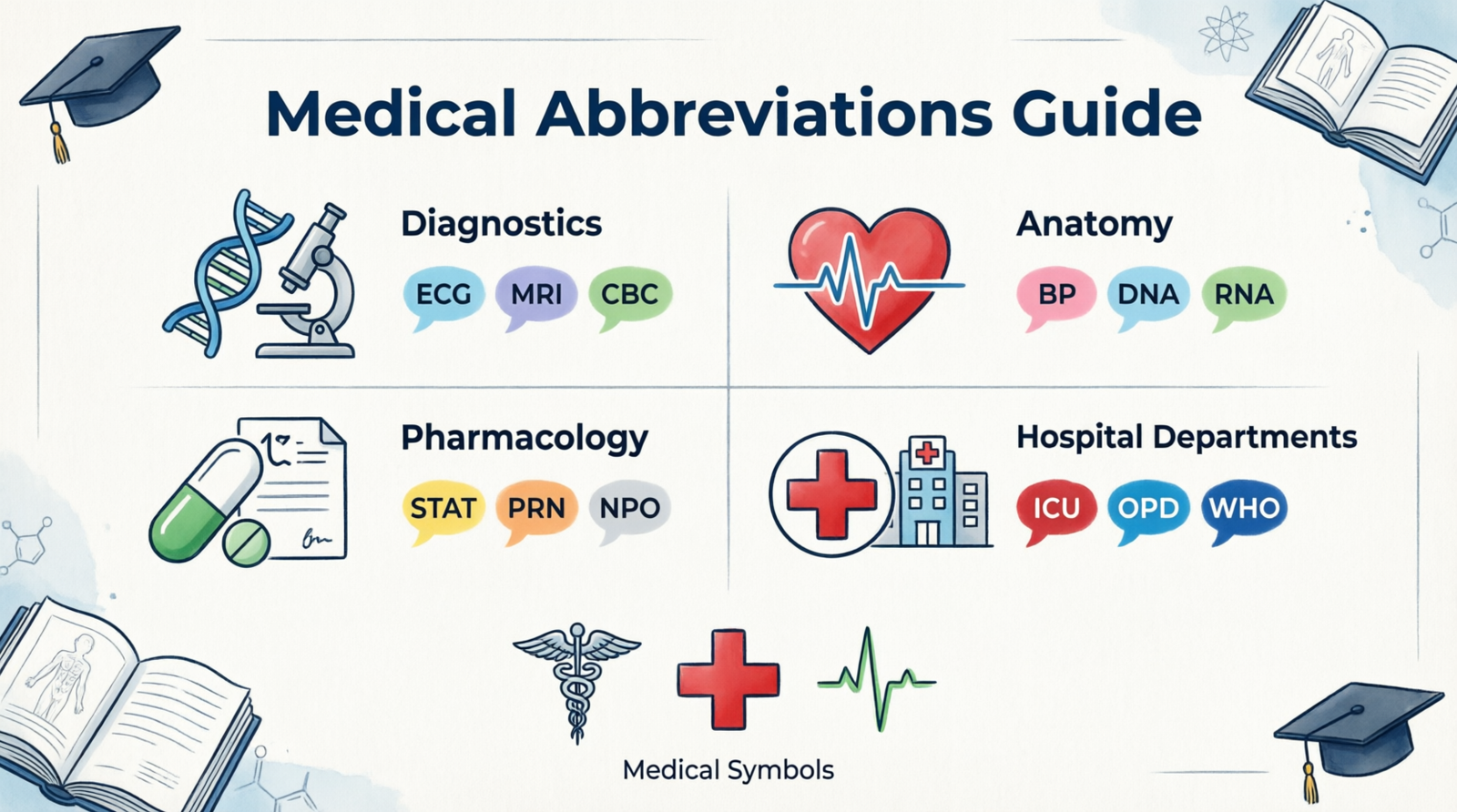
In the fast-paced world of healthcare and medical science, precision and efficiency are paramount. Medical professionals, researchers, and students rely heavily on standardized abbreviations and acronyms to communicate complex diagnoses, treatments, and anatomical concepts quickly.
For students preparing for competitive exams like NEET, AIIMS, Nursing Entrance Exams, UPSC, SSC, or VVM, mastering medical abbreviations is not just an advantage—it is a strict necessity. A single misinterpreted abbreviation can be the difference between a correct answer and a critical error in clinical practice.
This comprehensive study guide categorizes the most important, high-yield medical abbreviations, providing their full forms and clear, concise explanations. Bookmark this page for your daily revision!
1. Anatomy, Physiology, and Vital Signs
Understanding the basic language of the human body is the first step in medical science. These abbreviations are foundational.
|
Abbreviation |
Full Form |
Brief Explanation |
|---|---|---|
|
CNS |
Central Nervous System |
The brain and spinal cord; the body's main control center. |
|
PNS |
Peripheral Nervous System |
The network of nerves outside the brain and spinal cord. |
|
CVS |
Cardiovascular System |
The heart and blood vessels responsible for circulating blood. |
|
GIT / GI |
Gastrointestinal Tract |
The stomach and intestines, responsible for digestion and absorption. |
|
RS |
Respiratory System |
The lungs and airways responsible for gas exchange. |
|
BP |
Blood Pressure |
The pressure of circulating blood against the walls of blood |
Thinking completed
The Ultimate Guide to Medical Science Abbreviations: A Comprehensive Study Material for Students and Professionals
In the fast-paced world of healthcare and medical science, precision and efficiency are paramount. Medical professionals, researchers, and students rely heavily on standardized abbreviations and acronyms to communicate complex diagnoses, treatments, and anatomical concepts quickly.
For students preparing for competitive exams like NEET, AIIMS, Nursing Entrance Exams, UPSC, SSC, or VVM, mastering medical abbreviations is not just an advantage—it is a strict necessity. A single misinterpreted abbreviation can be the difference between a correct answer and a critical error in clinical practice.
This comprehensive study guide categorizes the most important, high-yield medical abbreviations, providing their full forms and clear, concise explanations. Bookmark this page for your daily revision!
1. Anatomy, Physiology, and Vital Signs
Understanding the basic language of the human body is the first step in medical science. These abbreviations are foundational.
|
Abbreviation |
Full Form |
Brief Explanation |
|---|---|---|
|
CNS |
Central Nervous System |
The brain and spinal cord; the body's main control center. |
|
PNS |
Peripheral Nervous System |
The network of nerves outside the brain and spinal cord. |
|
CVS |
Cardiovascular System |
The heart and blood vessels responsible for circulating blood. |
|
GIT / GI |
Gastrointestinal Tract |
The stomach and intestines, responsible for digestion and absorption. |
|
RS |
Respiratory System |
The lungs and airways responsible for gas exchange. |
|
BP |
Blood Pressure |
The pressure of circulating blood against the walls of blood vessels (measured as Systolic/Diastolic, e.g., 120/80 mmHg). |
|
HR |
Heart Rate |
The number of heartbeats per minute (normal resting: 60–100 bpm). |
|
RR |
Respiratory Rate |
The number of breaths a person takes per minute (normal adult: 12–20 breaths/min). |
|
SpO₂ |
Peripheral Capillary Oxygen Saturation |
An estimate of the amount of oxygen in the blood, measured non-invasively via a pulse oximeter. |
|
Temp |
Temperature |
The measure of the body's ability to generate and get rid of heat (normal: ~98.6°F or 37°C). |
2. Diagnostics, Imaging, and Laboratory Tests
Medical diagnosis relies heavily on objective data. These acronyms represent the most common tests ordered by physicians.
|
Abbreviation |
Full Form |
Brief Explanation |
|---|---|---|
|
CBC |
Complete Blood Count |
A blood test evaluating overall health, detecting disorders like anemia, infection, and leukemia. |
|
ESR |
Erythrocyte Sedimentation Rate |
A non-specific blood test that detects inflammation in the body. |
|
LFT |
Liver Function Test |
A panel of blood tests to assess the health and function of the liver. |
|
KFT / RFT |
Kidney / Renal Function Test |
Blood tests (including urea and creatinine) to evaluate how well the kidneys are working. |
|
ABG |
Arterial Blood Gas |
A test measuring the levels of oxygen and carbon dioxide in the blood, and the blood's pH. |
|
ECG / EKG |
Electrocardiogram |
A test recording the electrical activity of the heart to detect arrhythmias or ischemia. |
|
EEG |
Electroencephalogram |
A test measuring electrical activity in the brain, used to diagnose epilepsy and sleep disorders. |
|
MRI |
Magnetic Resonance Imaging |
A non-invasive imaging technique using strong magnetic fields to visualize detailed internal structures. |
|
CT / CAT |
Computed Tomography / Computerized Axial Tomography |
An imaging method using X-rays to create cross-sectional images of the body. |
|
USG |
Ultrasonography |
Imaging using high-frequency sound waves, commonly used in obstetrics and abdominal exams. |
|
PCR |
Polymerase Chain Reaction |
A laboratory technique used to amplify a specific DNA segment, crucial for genetic testing and pathogen detection (e.g., COVID-19). |
|
ELISA |
Enzyme-Linked Immunosorbent Assay |
A plate-based assay technique designed for detecting and quantifying substances like peptides, proteins, and antibodies. |
3. Diseases, Conditions, and Pathology
These abbreviations describe specific medical conditions, syndromes, and pathological states frequently tested in exams.
|
Abbreviation |
Full Form |
Brief Explanation |
|---|---|---|
|
MI |
Myocardial Infarction |
Commonly known as a "heart attack"; occurs when blood flow to the heart is blocked. |
|
CVA |
Cerebrovascular Accident |
Commonly known as a "stroke"; occurs when blood supply to part of the brain is interrupted. |
|
TIA |
Transient Ischemic Attack |
A "mini-stroke" caused by a temporary decrease in blood supply to part of the brain. |
|
CAD |
Coronary Artery Disease |
Narrowing or blockage of the coronary arteries, usually caused by atherosclerosis. |
|
COPD |
Chronic Obstructive Pulmonary Disease |
A group of lung conditions (including emphysema and chronic bronchis) that cause breathing difficulties. |
|
DM |
Diabetes Mellitus |
A group of metabolic diseases characterized by high blood sugar levels over a prolonged period. |
|
HTN |
Hypertension |
Abnormally high blood pressure, a major risk factor for heart disease and stroke. |
|
UTI |
Urinary Tract Infection |
An infection in any part of the urinary system (kidneys, bladder, or urethra). |
|
IBS |
Irritable Bowel Syndrome |
A common disorder affecting the large intestine, causing cramping, abdominal pain, and altered bowel habits. |
|
ARDS |
Acute Respiratory Distress Syndrome |
A life-threatening lung injury that allows fluid to leak into the lungs, preventing oxygen from reaching organs. |
|
STD / STI |
Sexually Transmitted Disease / Infection |
Infections passed from one person to another through sexual contact (e.g., Syphilis, Gonorrhea). |
4. Pharmacology and Prescription Abbreviations
⚠️ Exam & Clinical Alert: While some of these abbreviations are being phased out in modern clinical practice (e.g., by The Joint Commission's "Do Not Use" list) to prevent medication errors, they remain highly relevant for academic textbooks and competitive exams.
|
Abbreviation |
Latin Origin / Full Form |
Meaning in Prescription |
|---|---|---|
|
PO |
Per Os |
By mouth (orally). |
|
IV |
Intravenous |
Administered directly into a vein. |
|
IM |
Intramuscular |
Injected into a muscle. |
|
SC / SQ |
Subcutaneous |
Injected into the tissue layer between the skin and the muscle. |
|
OD |
Omne in Die (or Oculus Dexter) |
Once a day (Note: Also means "Right Eye" in ophthalmology, making it a high-risk abbreviation). |
|
BD / BID |
Bis in Die |
Twice a day. |
|
TDS / TID |
Ter Die Sumendum |
Three times a day. |
|
QDS / QID |
Quater Die Sumendum |
Four times a day. |
|
PRN |
Pro Re Nata |
As needed (e.g., pain medication). |
|
STAT |
Statim |
Immediately / at once. |
|
AC |
Ante Cibum |
Before meals. |
|
PC |
Post Cibum |
After meals. |
|
HS |
Hora Somni |
At bedtime. |
|
NPO |
Nil Per Os |
Nothing by mouth (used before surgery or certain tests). |
|
OTC |
Over-The-Counter |
Medicines that can be bought without a doctor's prescription. |
5. Medical Specialties, Departments, and Hospital Units
Navigating a hospital or understanding medical literature requires familiarity with these structural abbreviations.
|
Abbreviation |
Full Form |
Brief Explanation |
|---|---|---|
|
OPD |
Outpatient Department |
A hospital department where patients receive diagnosis or treatment without being admitted overnight. |
|
IPD |
Inpatient Department |
The department where patients are admitted and stay overnight for treatment. |
|
ICU |
Intensive Care Unit |
A specialized department providing life support and intensive monitoring for critically ill patients. |
|
CCU |
Coronary Care Unit |
A specialized ICU for patients with acute heart conditions (e.g., post-MI). |
|
NICU |
Neonatal Intensive Care Unit |
An ICU specializing in the care of ill or premature newborn infants. |
|
PICU |
Pediatric Intensive Care Unit |
An ICU dedicated to the care of critically ill infants and children. |
|
ER / A&E |
Emergency Room / Accident & Emergency |
The primary point of entry for patients requiring immediate medical attention. |
|
OT |
Operating Theater |
A facility within a hospital where surgical operations are carried out in an aseptic environment. |
|
ENT |
Ear, Nose, and Throat |
Also known as Otolaryngology; the medical specialty dealing with conditions of the head and neck. |
|
OB/GYN |
Obstetrics and Gynecology |
The medical specialty dealing with pregnancy, childbirth, and the female reproductive system. |
6. Public Health and Global Medical Organizations
For general science and current affairs sections of exams, knowing these global and national bodies is essential.
|
Abbreviation |
Full Form |
Primary Role |
|---|---|---|
|
WHO |
World Health Organization |
A specialized agency of the UN responsible for international public health. |
|
CDC |
Centers for Disease Control and Prevention |
The national public health institute of the United States. |
|
ICMR |
Indian Council of Medical Research |
India’s apex body for the formulation, coordination, and promotion of biomedical research. |
|
NIH |
National Institutes of Health |
The primary agency of the US government responsible for biomedical and public health research. |
|
FDA |
Food and Drug Administration |
The US federal agency responsible for protecting public health by ensuring the safety of drugs and medical devices. |
|
UNICEF |
United Nations Children's Fund |
A UN agency responsible for providing humanitarian and developmental aid to children worldwide. |
⚠️ Commonly Confused Medical Abbreviations (Exam Trap Alert!)
Competitive exams frequently test your ability to distinguish between similar-looking or related abbreviations. Keep these distinctions crystal clear:
- ECG vs. EEG:
- ECG (Electrocardiogram): Measures the heart's electrical activity.
- EEG (Electroencephalogram): Measures the brain's electrical activity.
- CVA vs. CVD:
- CVA: Cerebrovascular Accident (Stroke - brain).
- CVD: Cardiovascular Disease (Heart and blood vessels).
- OD vs. OS vs. OU (Ophthalmology):
- OD: Oculus Dexter (Right Eye).
- OS: Oculus Sinister (Left Eye).
- OU: Oculus Uterque (Both Eyes). (Note: In general prescriptions, OD can also mean "Once Daily," which is why it is considered a dangerous abbreviation in modern clinical practice).
- MI vs. MS:
- MI: Myocardial Infarction (Heart Attack).
- MS: Multiple Sclerosis (neurological disease) OR Mitral Stenosis (heart valve condition). Context is key!
- COPD vs. CAD:
- COPD: Chronic Obstructive Pulmonary Disease (Lungs).
- CAD: Coronary Artery Disease (Heart).
📝 Quick Revision Checklist (For Last-Minute Prep)
- CNS: Central Nervous System
- CBC: Complete Blood Count
- ECG: Electrocardiogram
- MRI: Magnetic Resonance Imaging
- MI: Myocardial Infarction
- CVA: Cerebrovascular Accident
- PO: Per Os (By mouth)
- PRN: Pro Re Nata (As needed)
- STAT: Statim (Immediately)
- NPO: Nil Per Os (Nothing by mouth)
- ICU: Intensive Care Unit
- WHO: World Health Organization
💡 Did You Know? (Bonus Facts for Exams)
- Why ECG and EKG are the same: "ECG" is derived from the English term Electrocardiogram. "EKG" comes from the German term Elektrokardiogramm. Because "ECG" can sometimes be misheard as "EEG" over a noisy hospital intercom, "EKG" is often preferred in clinical settings to avoid fatal errors.
- The Origin of "STAT": The term "STAT" comes from the Latin word statim, meaning "immediately" or "at once." It is used when a medication or test is required urgently.
- The "Do Not Use" List: Organizations like the Joint Commission (TJC) and the Institute for Safe Medication Practices (ISMP) maintain a "Do Not Use" list of abbreviations. For example, "U" (for Unit) can be mistaken for "0" (zero), "4", or "cc", leading to a tenfold medication overdose. The correct practice is to write out the word "Unit."
- Placebo Effect: While not an abbreviation, understanding that a "Placebo" is an inert substance (like a sugar pill) given to a patient to psychologically satisfy their desire for treatment is a frequent and crucial concept in pharmacology exams.
A Final Thought for Aspiring Medical Professionals
Medical abbreviations are the shorthand of healthcare. They represent decades of scientific evolution, allowing doctors, nurses, and researchers to communicate with speed and precision. However, with great efficiency comes great responsibility. A misread abbreviation can have life-or-death consequences, which is why mastering them is a fundamental step in your medical education.
By internalizing these terms, you are not just memorizing for an exam; you are learning the universal language of healing.
Keep this guide handy, revise it regularly, and step into your exams (and eventually, your clinical practice) with absolute confidence!
Keywords : abbreviation abbreviations blood body brain can clinical disease exams form full health heart medical not responsible science system test these
🔔 हमारे YouTube चैनल को सब्सक्राइब करें:
👉 https://www.youtube.com/channel/UC76hj0iZcKkiW1YizHs0n2Q/
📘 Facebook Page:
👉 https://www.facebook.com/DigiTatvaPlus
🌿 वेबसाइट विजिट करें:
👉 https://www.bhaktipulse.com/
👉 https://www.bhaktipulse.com/video
✨ Guest Post Invitation – Share Your Divine Wisdom
🙏 Welcome to BhaktiPulse – your spiritual companion for Aarti, Chalisa, Bhajan, Mantra, and divine stories.
🌸 Do you have spiritual knowledge, devotional content, experiences, or stories that can inspire others?
📖 We warmly invite you to contribute your valuable content and become a part of our growing spiritual community.
✨ Your content may include:
- 🪔 Aarti, Chalisa, Mantra, Bhajan
- 📜 Spiritual stories & life lessons
- 🔍 Unknown facts & scientific reasons in Sanatan Dharma
- 🌿 Ayurveda, rituals, and traditions
💡 If your content aligns with our vision, we will proudly feature it on BhaktiPulse.
📩 Submit your content or contact us here:
👉 https://www.bhaktipulse.com/contact.php
🌼 Let your words spread devotion, ज्ञान, and positivity to the world.
🙏 Join us in this divine journey!
💬 Comments
Approved Comments